European Green Deal and Brock Alloy Wheels
As part of our long-term sustainability strategy, we are guided by the goals of the European Green Deal and consistently implement them in our company. We focus on five key areas of action:
- Climate neutrality
- Clean and renewable energy
- Protection and promotion of biodiversity
- Sustainable, low-emission mobility
- Resource-efficient and innovative industrial processes
Emissions reduction and climate protection
In line with the EU target of reducing greenhouse gas emissions by at least 55% by 2030, we achieved a significant reduction in our corporate carbon footprint in 2024. Compared to 2023, we were able to reduce our CCF by 54.93%.
This development is the result of targeted measures in three key areas:
- sustainable energy procurement,
- comprehensive process optimization in production,
- and more efficient and lower-emission logistics structures.
In this way, we are making a measurable contribution to the implementation of European climate targets while at the same time strengthening the future viability of our production site.

Biodiversity & Local Impacts
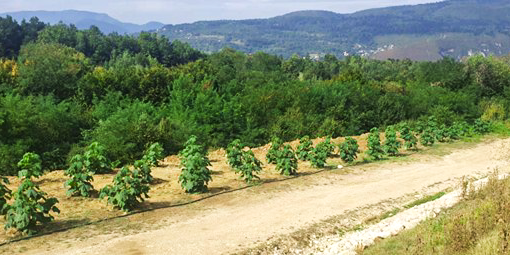
In 2024, we planted around 400 trees in the vicinity of our production site. This measure strengthens regional biodiversity, improves air quality, and reduces noise. As they grow, the trees will develop into important natural CO₂ reservoirs, thereby making a long-term contribution to our decarbonization goals in line with the European Green Deal.
Sustainable mobility
Today, 96% of our forklifts and pallet trucks are already electrically powered—both at our production site and in our external warehouse. Our goal is to make all internal transport completely emission-free. That is why we are consistently focusing on electric vehicles for all future purchases, thereby supporting Europe-wide efforts to achieve low-emission mobility.
Transition to
clean energy
Since January 2024, we have been purchasing 100% certified renewable electricity, which is verified by guarantees of origin. This sends a clear signal about our consistent transition to clean energy and gradually reduces our dependence on fossil fuels.
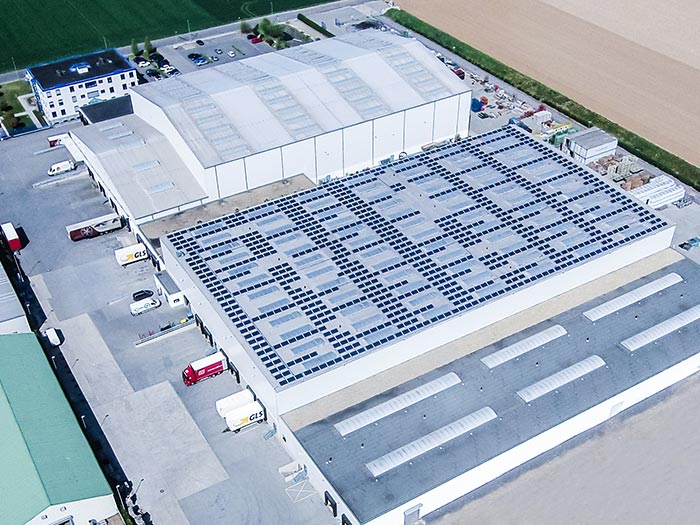
To further improve our energy balance, we are investing in the expansion of our own generation capacities: new solar modules are being installed on the roofs of our production site, which will generate around 2.65 MWh per year in the future, covering 14–15% of our total energy requirements. This not only strengthens our security of supply, but also increases energy efficiency – two core objectives of the European Green Deal.
Our warehouse is also already benefiting from our own generation: today, it is mainly supplied with electricity from the company’s own solar systems, which already cover 47% of its energy consumption.
%
Renewable electricity
%
Electric mobility

Industrial efficiency and innovation
The continuous development of our production processes is a central component of our sustainability strategy. Our goal is to permanently reduce resource consumption, energy use, and emissions while increasing the performance of our plants. In doing so, we directly support the vision of the European Green Deal for a modern, clean, and competitive industry. Our approach combines technological innovation, process-related optimization, and responsible use of energy and materials – for efficient, sustainable production.
Optimization of compressed air systems
In recent years, we have invested heavily in modernizing our compressed air supply. The new systems significantly improve energy efficiency by reducing power consumption while providing a more stable and reliable supply.
Intelligent controls, more efficient compressors, and optimized pipe networks significantly reduce indirect CO₂ emissions.
In addition to the positive environmental impact, the modernized compressed air systems also make an important contribution to economic efficiency:
- lower energy consumption,
- reduced operating costs,
- higher system performance and reliability.
They thus form an essential basis for efficient and sustainable production.
Low-curing primers and process optimization
Another important step toward saving energy is the introduction of low-curing primers. These materials cure at significantly lower temperatures, thereby reducing both electricity consumption and fuel requirements in furnace operation.
The result is a measurable reduction in indirect CO₂ emissions while increasing energy efficiency.
There are also advantages in terms of process quality and stability:
- more uniform curing,
- lower thermal stress,
- optimized throughput times.
These measures have enabled us to make the curing phase more sustainable and cost-efficient overall.
Use of innovative heat recovery technologies
We use modern heat recovery systems to make optimum use of unused energy potential. Waste heat from compressors is captured and used for hot water and building heating, significantly reducing the need for fuel-based heating systems.
In addition, we specifically reduce the process temperatures in several process steps, which further reduces the consumption of electrical and thermal energy.
The advantages at a glance:
-
Lower use of external energy sources
-
Significantly reduced CO₂ emissions
-
Noticeable cost savings
-
Higher overall energy efficiency of our plants
These measures increase the climate resilience of our site and sustainably reduce our dependence on fossil fuels.